Medicare Compliance & PT CPT Code Checks Built In
Physical Therapy Compliance Software: CPT, Modifiers & NCCI Edits
TurboPT's physical therapy compliance software applies modifier logic, NCCI edits, medical necessity flags and Medicare rules while the note is written, so errors are caught before a claim goes out.
 HIPAA · ONC · PCI certified
Used by 1,200+ clinics since 1991.
Physical Therapy Compliance Software, Built Into the Note
Medical Billing Coding Software That Checks Every Note Automatically
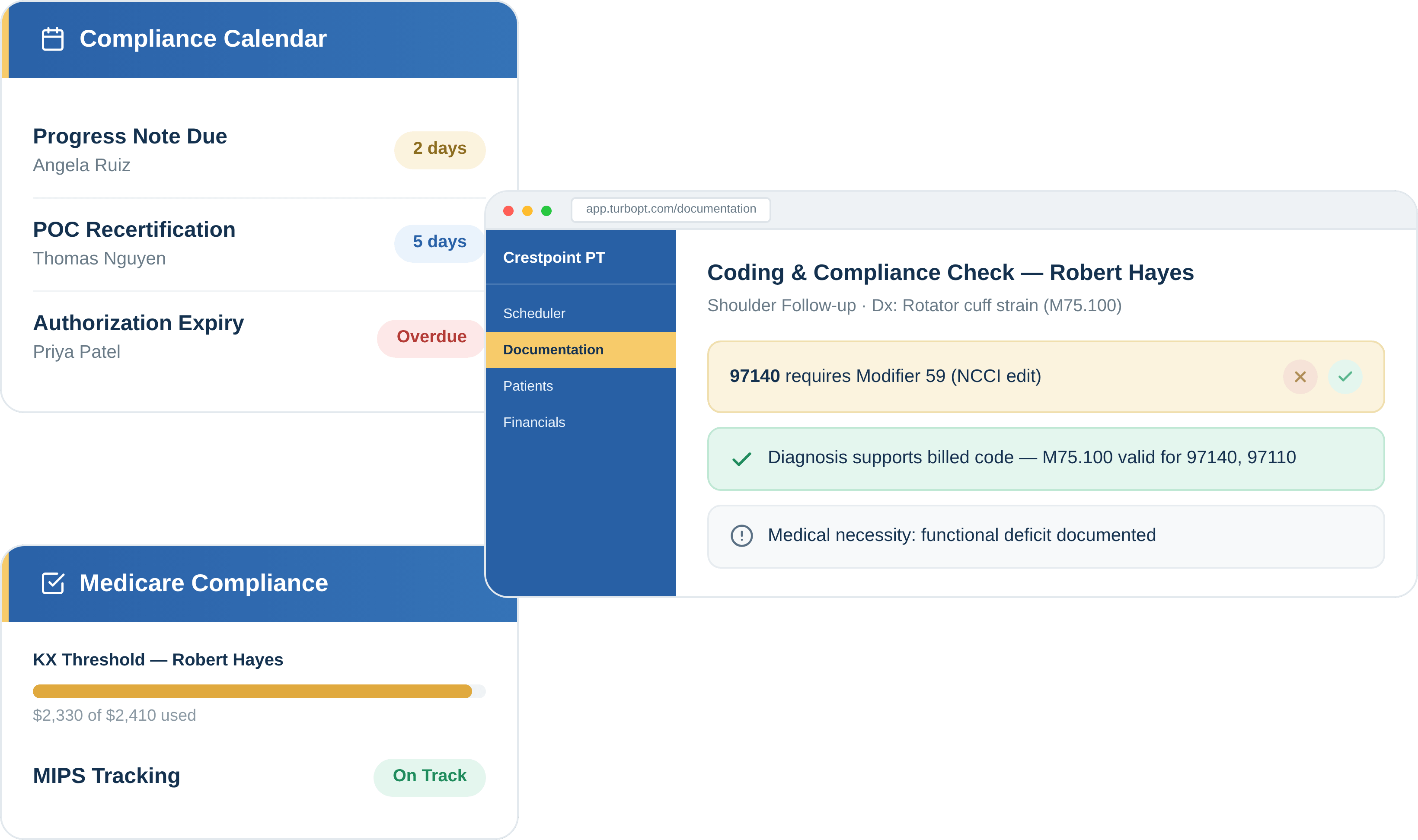
Below is every check running in the background while a note gets written — modifiers, bundling, medical necessity, Medicare thresholds, and every recurring deadline that would otherwise depend on someone remembering.
NCCI Edits & Modifier Logic Checks
Bundling and modifier issues flagged before submission.
Diagnosis-to-CPT Code Validation for Physical Therapy
Flags a diagnosis that won’t support the code you’re billing, in the note.
Medical Necessity Documentation Flags
Documentation gaps that put a claim at risk.
KX Modifier Thresholds & MIPS Tracking
KX thresholds, therapy cap, and MIPS tracked automatically.
Compliance Calendar for Progress Notes & Recerts
Progress notes, re-evals, POC recertification, and authorization expiry per payer and per discipline, with a due queue for providers and an overdue worklist for managers.
Physical Therapy CPT Codes & Compliance FAQs
Answers on NCCI edits, the KX and GP modifiers and how TurboPT checks coding before billing.
Physical therapy compliance software checks coding and Medicare rules before a claim is submitted. TurboPT runs these checks in the background while the note is written: NCCI bundling and modifier issues, diagnosis-to-CPT validation, medical necessity gaps, KX thresholds, the therapy cap and MIPS, plus a calendar for progress notes, re-evaluations, recertifications and authorization expiry.
NCCI edits are CMS National Correct Coding Initiative rules that identify pairs of CPT or HCPCS codes that should not be billed together for the same patient on the same date unless an appropriate modifier applies. TurboPT flags bundling and modifier issues before submission, so they're fixed in the note instead of after a payer denial.
The KX modifier is added to Medicare outpatient therapy claims once a patient's therapy costs for the year pass the KX threshold, attesting that continued services are medically necessary and supported by documentation. TurboPT tracks KX thresholds and the therapy cap automatically, so providers know when the modifier applies.
The GP modifier identifies services delivered under an outpatient physical therapy plan of care; occupational therapy uses GO and speech-language pathology uses GN. Missing or wrong therapy modifiers are a common cause of rejected claims, and TurboPT’s modifier logic flags modifier issues while the note is being written, before the claim goes out.
Yes. Diagnosis-to-CPT validation flags, inside the note, a diagnosis that won't support the CPT code you're billing. Together with medical necessity flags for documentation gaps that put a claim at risk, it helps make sure physical therapy CPT codes are backed by the diagnosis and documentation before a payer reviews them.
No. It won’t replace clinical judgment, but it catches the common billing-rule and Medicare errors before a payer sees them. Recurring deadlines for progress notes, re-evaluations, plan of care recertification and authorization expiry are tracked per payer and per discipline, with a due queue for providers and an overdue worklist for managers.
See a Compliance-First Physical Therapy EMR in Action
Watch Medicare compliance get applied automatically to a real note.